
Cellphones are changing how TV news is shot in the field
By Holli Haerr
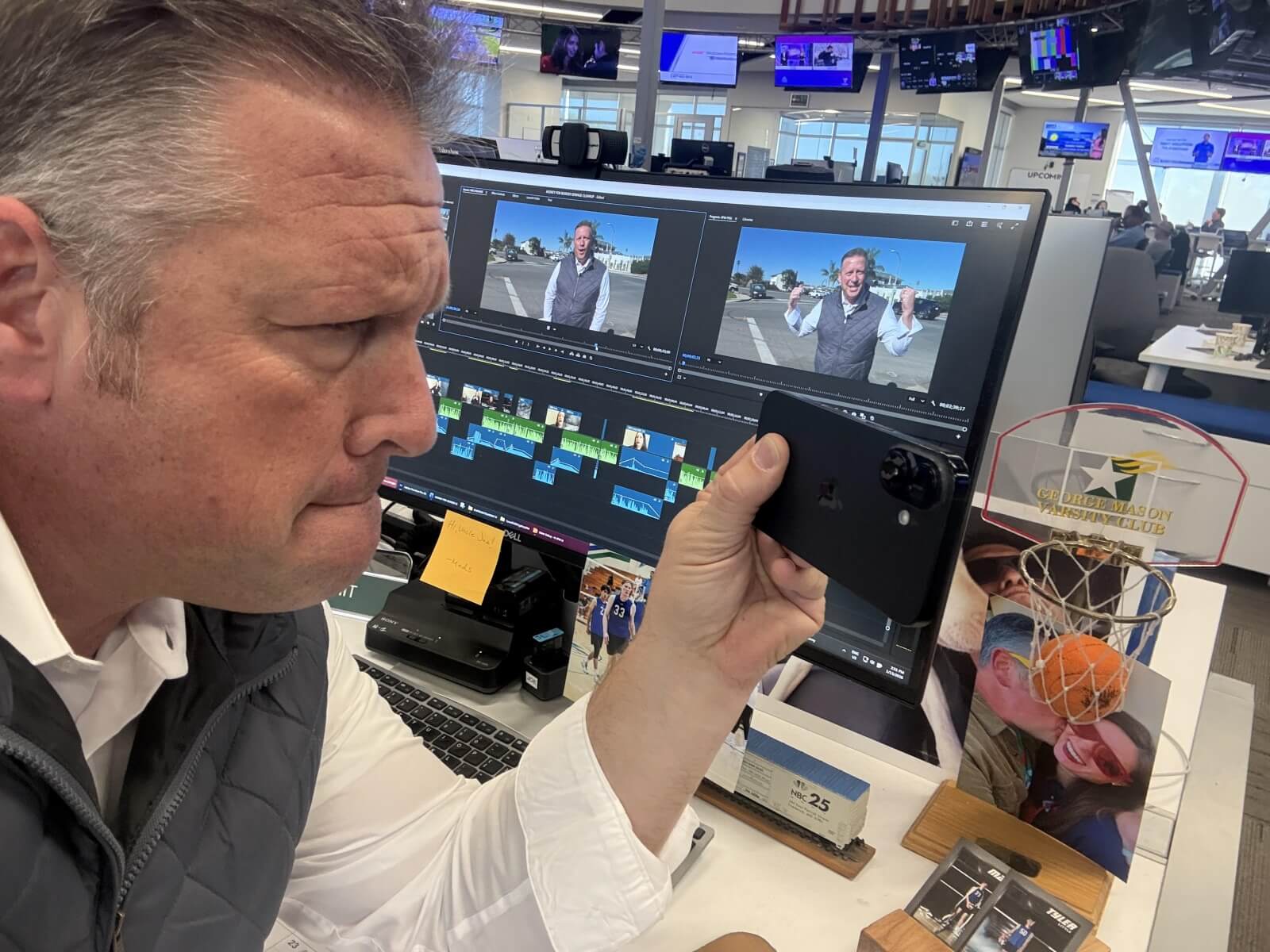
In newsrooms across the country, cellphones aren’t just for social posts anymore. In many cases, they’re phasing out the more traditional news cameras.
Mike Castellucci, an MMJ with Denver 7, and presenter of a TedTalk called “Phoning it in”, has been shooting TV packages on iPhones for about 10 years and holds seminars on the topic around the world.
“I started with an iPhone 8 at WFAA with 16 gigs of storage and I’ve been doing it ever since,” he says.
When he first started, he’d attach lenses to his iPhone, but that’s not necessary anymore as phones keep improving.
“I can tell a difference between a 16 and this orange 17 Pro Max that I use,” he says. “The regular camera is better…the new telephoto is better, allows a clearer picture with lower light.”
Of his packages, he says, “A normal, average person will not be able to know if I did it on a phone or not.”
Not everyone is ready to ditch traditional news cameras completely, but the tide is shifting.
“I call my camera a dinosaur," says Ed Sweeting of his Sony news camera. He has been working at News 12 Long Island since 1998. Just as the demands of his job have changed over the years, so has the equipment.
The “dinosaur” is sometimes sidelined by his cellphone or a DJI Osmo camera, which he says he is still learning to use.
“If you can be three to five feet away from your subject, you’re not going to be able to tell the difference between a 4K cellphone and a broadcast quality camera,” he says.
Often, he and other crews use a combination of cameras.
At press conferences with the district attorney, Sweeting says, crews will set up their news cameras on tripods around the podium, and then use cellphones or the DJI Osmos to get b-roll at the evidence table.
Joe Little, an MMJ with NBC 7 San Diego, also uses multiple cameras.
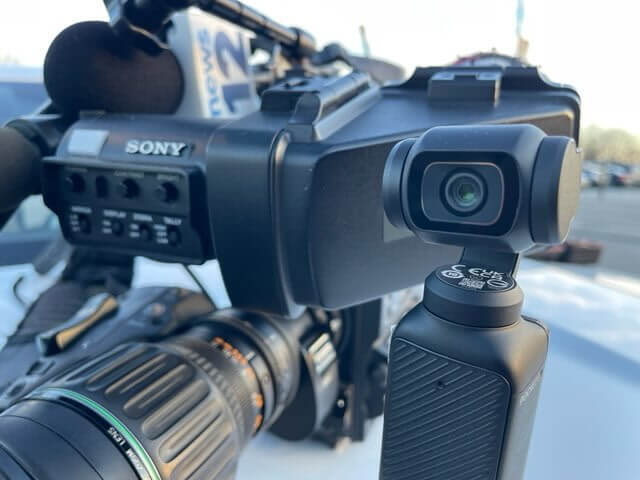
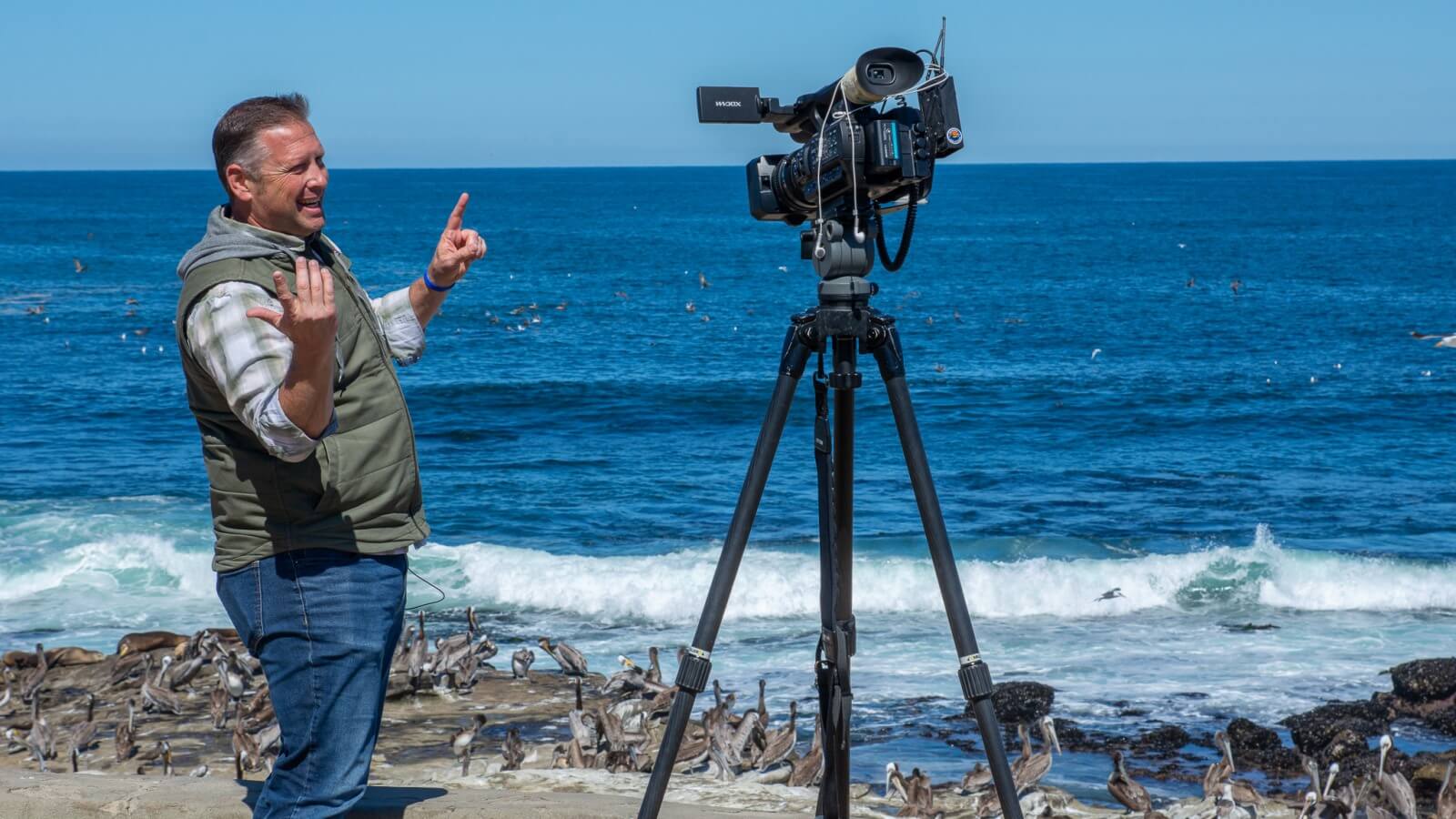
“I’m using GoPros, cellphones, and my ENG,” he says. “Whatever tool is easiest and best. A lot of times I’ll use my cellphones for stories that I have to be super fast in small areas.”
While Little’s not ready to give up his bigger camera, he has shot some stories using only his cell.
“I enjoyed it to a certain degree,“ he says, and knows there may be a day when stations get rid of the bigger cameras. “This is so much more affordable than any ENG gear ever was or ever will be, and we all come with it.”
Starr Fuentes, a content creator for the Brooklyn Chamber of Commerce, sees more and more crews shooting Chamber events with the DJI Osmos and cellphones.
She shoots packages and highlight reels for the Chamber with both and says, “When used correctly, you can manipulate the phone to do almost anything you want.”
She adds it’s not just about the quality.
“Especially if you’re shooting something… or editing it, doing it all from your phone and already having the footage that you can throw on your timeline is very convenient.”
Where journalists sometimes use cellphones
Little and Sweeting say smartphones can be especially useful in certain reporting situations.
- Small spaces for creative shots such as inside appliances, on dashboards, or during ride along interviews
- Locations where cellphones are allowed but TV cameras are restricted
- Interviews where the subject feels uncomfortable in front of a traditional camera
- Situations where subjects are moving quickly and mobility is essential
“I followed a bunch of delegates in Washington, D.C., and they were moving so fast,” Little recalls. “In order for me to keep up, I had to have my cellphone going.”
Tips for using your cellphone
- Make sure the camera is set to 4K
- For vertical video for social posts along with horizontal for packages, shoot once horizontally and zoom in during editing
- Zoom with your feet. The closest shots often look the best
- Use a tripod. Handheld rigs and cages can also help
- Use good microphones
- Try cinematic mode to keep your subject in focus
- To zoom smoothly, use the dial between the zoom numbers and the record button
- Videography apps from Blackmagic and others can provide more control
- Lock your focus to prevent the phone from adjusting exposure while shooting
“People tap for a focus, but if you hold your finger on it, it will lock it and that way there won’t be any light shift. I do that with each shot," Castelluci said.
Editing mobile video
When it comes to editing, Fuentes likes to edit on her phone, using Premiere. She notes that other apps like TikTok and iMovie can be good for reels but aren’t as good for packages because you can’t be as specific with your shots and layers of audio.
Castellucci, Sweeting and Little edit on computers. Castellucci air drops his files, Sweeting uses a cord to attach the phone and drags the files over.
Overall, all agree, it doesn’t matter what you shoot or edit on, it’s the quality of the shots and the storytelling that are important.
“The visuals we produce for our consumers, whether they are looking at us on a big screen TV or if they’re watching on their phones or watching on YouTube, they still want and deserve high quality video,” says Little.
“Just tell stories, it doesn’t make a difference, what you’re shooting it on, “ Sweeting adds. “Taking pictures hasn’t changed…you’re still, ‘what am I taking a picture of, what am I showing the world?’ and fill up that screen.”
Photo credits: Joe Little and Ed Sweeting.